
Best Wearable Breast Pumps: Top Hands-Free Picks for Busy Parents
As an Amazon Associate, earnings are made from qualifying purchases. Some links may earn a commission at no extra cost to the reader.
Wearable pumps are all about comfort + convenience—but the ones that tend to work best consistently usually nail three things: fit (correct flange sizing), easy cleaning, and enough bottle/bag capacity so sessions don’t get interrupted mid-pump.
Top picks
Elvie Pump — Best for the most discreet, app-first wearable
For shoppers prioritizing a true “set it and forget it” wearable with strong app control, this is one of the cleanest all-around picks. Why it wins: 5 oz / 150 ml bottle capacity per side and a streamlined in-bra setup.

- Pump Anytime, Anywhere: The smallest, lightest and quietest wearable breast pump Elvie Pump makes it...
- The Smallest: Elvie wearable breast pump is the smallest, most slimline all in bra breast pump for...
- The Quietest: Only the Elvie electric breast pump uses powerful, miniature Piezo pumps that create...
Pros
-
5 oz / 150 ml capacity per side (fewer mid-session swaps).
-
Strong app-driven control and tracking (helpful for routine-building).
-
Warranty info is clearly published by the manufacturer.
Cons
-
Premium ecosystem: replacement parts add ongoing cost.
-
Tricky fit situations can require patience to dial in sizing.
Trade-offs / who should skip (failure cases)
-
Skip if pumping regularly exceeds 5 oz per side per session (bottle swapping will be frequent).
-
Skip if a pump designed for more movement/bending is preferred.
Scores: Performance 4/5 • Capacity (per-side) 4/5 • Ease of use 4/5 • Value 3/5
Willow 360 — Best for pumping in more positions (leak-resistant system)
This is a strong option for people who want more freedom of movement and a closed, spill-resistant milk system. Why it wins: designed around leak-resistant milk bags or reusable containers and intended for pumping in a wider range of positions.
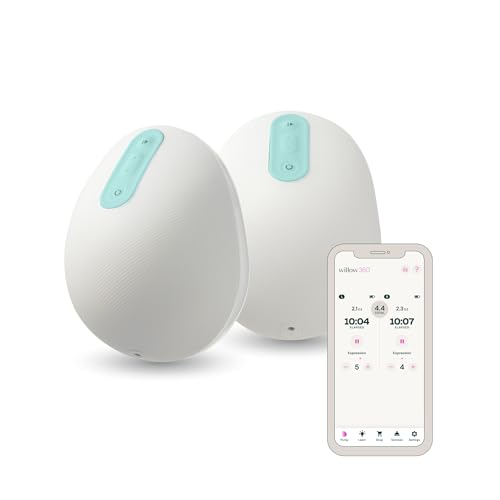
- FULLY IN BRA HANDS FREE PUMPING: Discreet wearable breast pump fits inside a standard nursing bra...
- LEAK PROOF DESIGN: Patented latch technology and self-sealing milk bags are designed to help prevent...
- HOSPITAL GRADE SUCTION WITH APP CONTROL: 7 smart suction levels automatically transition between...
Pros
-
Leak-resistant bag/container approach (great for movers).
-
Clear per-side capacity: 4 oz per bag/container (8 oz total).
-
Published warranty window (12 months).
Cons
-
4 oz per side can be limiting for higher-output sessions.
-
Ongoing bag cost (for those who prefer bags over containers).
Trade-offs / who should skip (failure cases)
-
Skip if output often exceeds 4 oz per side and swapping is a dealbreaker.
-
Skip if simplest-possible cleanup is the priority; this system can feel “more parts-y.”
Scores: Performance 4/5 • Capacity (per-side) 3/5 • Ease of use 3/5 • Value 3/5
Willow Go — Best for simpler cleaning + solid everyday wearable
For a more straightforward wearable experience than the 360 system, Willow Go is often the easier day-to-day choice. Why it wins: solid capacity plus a simpler hardware approach.
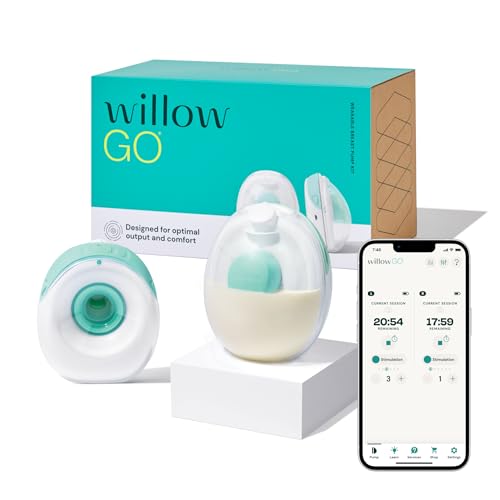
- FULLY IN BRA HANDS FREE PUMPING: Each pump fits entirely inside a standard nursing bra; No external...
- 15 HOSPITAL GRADE SUCTION LEVELS: Adjustable stimulation and expression modes help support a...
- EASY TO CLEAN REUSABLE CONTAINERS: 5 oz reusable containers (included) and optional 7 oz containers...
Pros
-
5 oz standard container capacity per side.
-
Optional larger 7 oz containers exist (helpful for high-output sessions).
-
12-month warranty is clearly stated by the brand.
Cons
-
Bulkier in-bra look than the most minimalist designs.
-
Comfort can suffer with a snug bra fit unless sizing is adjusted.
Trade-offs / who should skip (failure cases)
-
Skip if the most discreet silhouette under fitted tops is required.
-
Skip if a fully “set-and-track” app-centric workflow is the priority.
Scores: Performance 4/5 • Capacity (per-side) 4/5 • Ease of use 4/5 • Value 3/5
Momcozy M5 — Best for value (wearable convenience for less)
This is a common pick for getting into a true wearable setup without paying top-of-category pricing. Why it wins: strong feature set for a typical “hands-free at home” use case.

- Light Weights Hidden Pump - Only 230g, 2/3 the size of ordinary pumps. Momcozy M5 hands free breast...
- SPA-level Lactation - M5 breast pump the new concept "Baby Mouth" is structured like a baby sucking...
- Increase Milk Efficiency - M5 has a micro-vibration tech to promote milk comfort secretion during...
Pros
-
Often positioned as a value-forward wearable option.
-
Warranty policy is published by the manufacturer.
-
Frequently chosen as a secondary/convenience pump.
Cons
-
Official per-side capacity could not be verified from the manufacturer; retailer specs often list ~160 ml (~5.4 oz).
-
Support/returns can vary more by seller channel—choose the exact listing carefully.
Trade-offs / who should skip (failure cases)
-
Skip if the most “bulletproof” brand ecosystem and long-term parts availability are top priorities.
-
Highly fit-sensitive users should plan on experimenting with inserts/sizing (common with most wearables).
Scores: Performance 4/5 • Capacity (per-side) 4/5 • Ease of use 3/5 • Value 5/5
Recall/safety note: A Government of Canada recall/safety alert was posted in 2023 related to licensing/authorization status in Canada (later updated). No U.S. recall notice was found in that specific source.
Medela Freestyle Hands-free — Best for lightweight cups + a pocketable pump
For those who like in-bra cups but don’t want motors sitting in the bra, this design is compelling: the pump is a separate small unit and the cups are very light. Why it wins: 5 oz / 150 ml per cup plus clearly stated U.S. warranty terms.
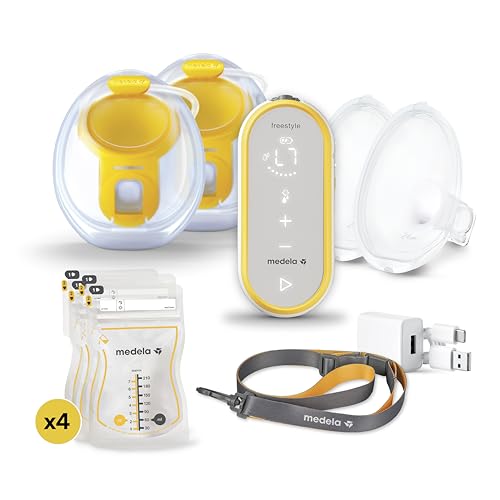
- Hands-Free: This rechargeable, pocket-sized pump with wearable cups enables hands-free pumping for...
- Anatomic Design: The research-based Hands-Free collection cups are designed to avoid localized...
- Comfortably Lightweight: Weighing just 76 g each, the ultra-light, wearable collection cups are...

Pros
-
5 oz / 150 ml capacity per cup (per side).
-
Very lightweight cups (maker states 2.7 oz per cup).
-
U.S. warranty is explicitly listed: 1 year on motor / 90 days on other parts.
Cons
-
Not fully self-contained (a small external pump unit is still managed).
-
More “kit-like” than true all-in-one wearables.
Trade-offs / who should skip (failure cases)
-
Skip if the goal is a fully all-in-one wearable with no external unit.
-
Skip if maximum movement freedom is needed; tubing/placement can be annoying for very active tasks.
Scores: Performance 4/5 • Capacity (per-side) 4/5 • Ease of use 4/5 • Value 3/5
Quick compare (no table)
-
Most discreet, app-first: Elvie Pump (5 oz/side).
-
Most movement-friendly system: Willow 360 (leak-resistant bag/container; 4 oz/side).
-
Simpler Willow option: Willow Go (5 oz/side; 7 oz optional).
-
Best value: Momcozy M5 (capacity not manufacturer-verified; retailer lists ~160 ml).
-
Lightest-cup style: Medela Freestyle Hands-free (5 oz/side; U.S. warranty listed).
Buying guide
1) Start with fit (it matters more than brand)
Wearables are far less forgiving than wall pumps. If sizing is between two options, prioritize a pump with easy insert options or readily available flange sizes. Poor fit is a fast route to discomfort and disappointing sessions.
2) Use the primary metric: per-side capacity
-
For longer sessions or higher output: look for ~5 oz+ per side (or an upgrade option).
-
For shorter, frequent sessions: 4 oz per side can work—but swapping may be needed if output exceeds capacity.
3) Decide: true all-in-one vs. cups + pocket pump
-
All-in-one (Elvie/Willow/Momcozy): maximum freedom, often more “bra bulk.”
-
Cups + pocket pump (Medela): lighter in-bra feel, but requires managing an external unit.
4) Don’t ignore warranty/support clarity
Wearables endure daily assembly and washing. Brands that publish clear warranty terms reduce uncertainty.
5) Availability / support risk
Corporate changes can affect long-term parts/support. For example, Elvie was reported as acquired by Willow in 2025 (worth factoring in for long-term reliance).
FAQs
Are wearable pumps good as a “primary” pump?
They can be, but many people prefer them as a convenience pump and keep a traditional electric pump as backup—mainly because wearables are more sensitive to fit and positioning.
What’s the easiest wearable to live with day-to-day?
Prioritize simpler parts and straightforward cleaning. In this list, Willow Go tends to be a lower-friction wearable style, while Medela’s cups stay light because the pump is separate.
What if pumping regularly exceeds 5 oz per side?
Look for bigger optional containers (like Willow Go’s 7 oz option) or a workflow where swapping is quick and realistic.
Is a special bra required?
Often no, but a snug, supportive nursing/pumping bra helps cups seal well. A too-loose bra is a common reason wearables underperform.
Any recall concerns to know?
No U.S. recalls for these specific models were verified from official U.S. recall sources in a quick check. A Canadian recall/safety alert was found for Momcozy wearables related to licensing/authorization status (later updated).
(For medical-device incident reports, the U.S. FDA MAUDE database exists, but it is not the same as an official recall.)
As an Amazon Associate, I earn from qualifying purchases.